This post may contain affiliate links. Please see our disclosure policy.
This torta pasqualina is a perfect Easter treat. It is so good, traditionally made in Italy at Easter time. Whilst lots of you might know exactly what this is, some of you may not have come across this before but it really is delicious. Imagine a buttery, flaky puff pastry pie with a creamy, cheesy spinach and ricotta filling and a layer of perfectly boiled eggs. The perfect savoury centrepiece to make over the Easter weekend and all through Spring and Summer.
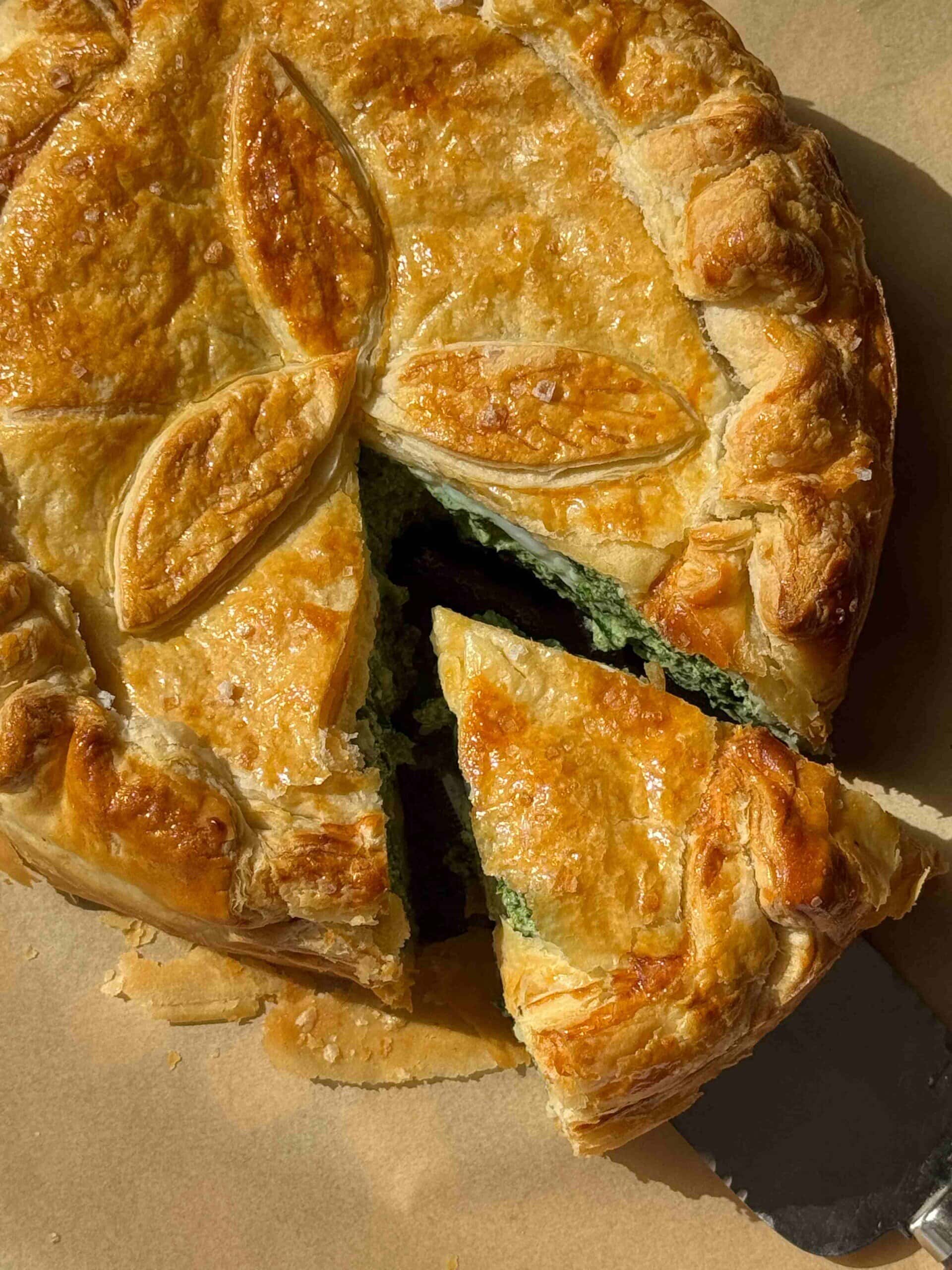
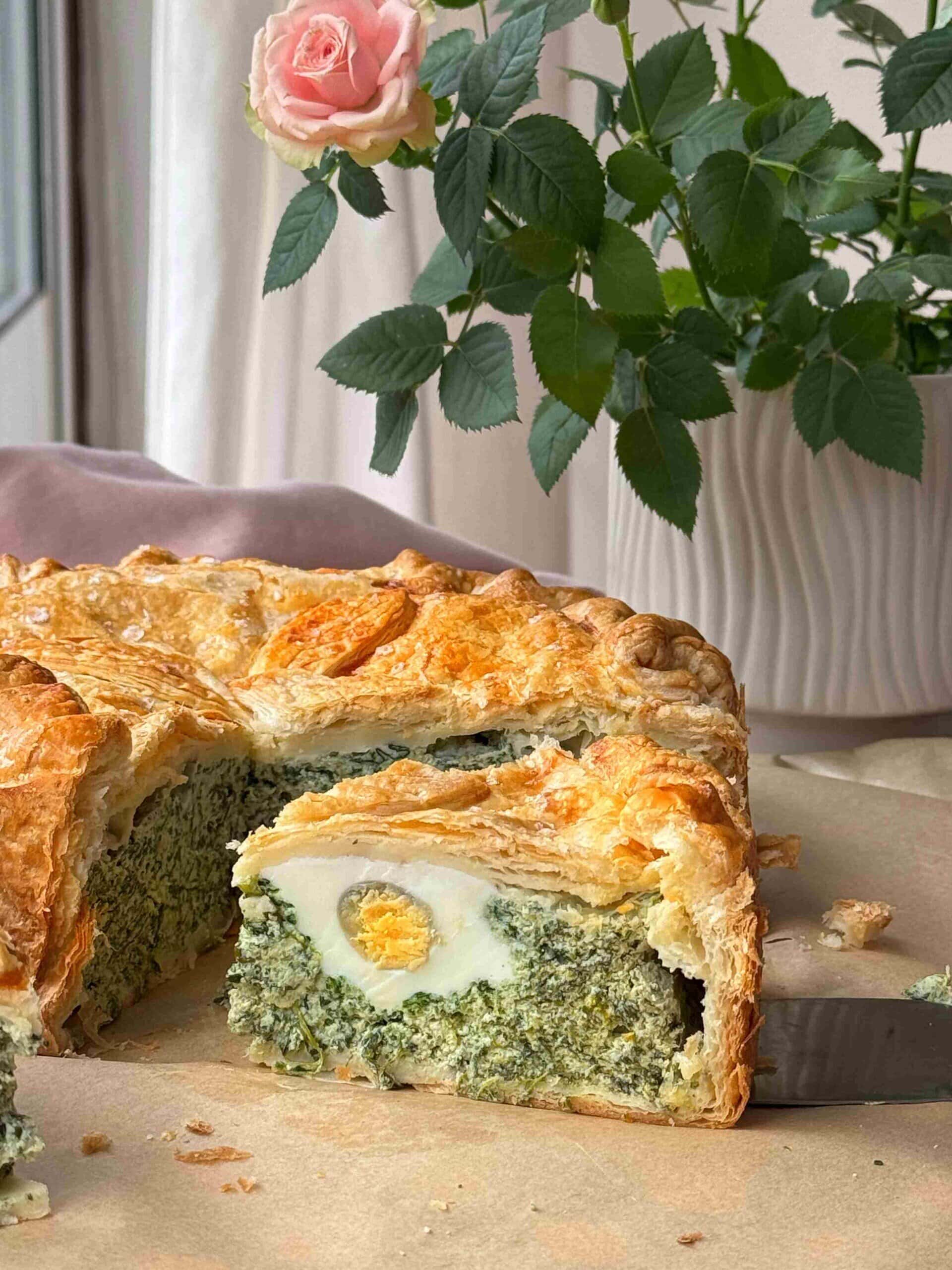
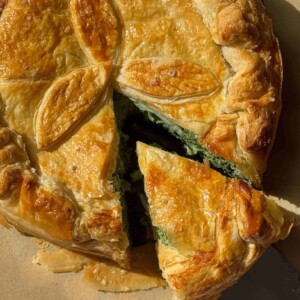
If you haven’t heard of it before, torta pasqualina is a popular Italian pie made over the Easter period (in fact, the translation is ‘Easter pie’). Although it is originally from Liguria, it is now made all over the country. It features buttery, flaky puff pastry with a creamy ricotta and spring greens filling. I have gone for spinach here, but you can use all sorts, like chard and artichokes. In amongst the greens is a layer of perfectly boiled eggs, which are only revealed when you cut it into slices.
A quick summary of how it’s made
This torta pasqualina is one of those recipes that looks (and sounds) a lot more complicated than it actually is. Once broken down into steps, it’s very straightforward. All you have to do is sauté off some garlic and spinach, remove the excess water, then chop finely and mix together with ricotta and seasoning to make the delicious filling.
After that, you just need to cut the puff pastry to line the tin, add the filling, crack in the eggs and then seal. Then you glaze with a bit of beaten egg, make some slits to allow the steam to escape, and pop in the oven to bake until golden. That is all there is to it. The trickiest part is allowing it to stand for at least 30 minutes (although don’t be tempted to rush this part – it is essential as the pie will be very hot and needs to firm up a bit).
Once it has cooled for at least 30 minutes, it is ready to serve. Traditionally, in Italy, it is served cold. I like to serve mine with a simple salad or some buttered herby Jersey Royals. It is also ideal for taking on picnics – as long as the weather is good!
Table of Contents
- A quick summary of how it’s made
- Why you will love this recipe:
- Ingredients:
- Substitutions and Variations:
- Here’s how to make this Italian torta pasqualina:
- Step 1: make the spinach & ricotta filling
- Step 2: roll the pastry and fill the pie
- Step 3: cover & bake the pie
- Cooking Tips:
- Frequently Asked Questions
- Storage & Make Ahead Instructions
- Other recipes you might enjoy:
- Made this recipe and loved it?
- Torta Pasqualina Recipe
Why you will love this recipe:
- It looks impressive and has a surprise egg filling.
- It is the perfect centrepiece for a special Easter lunch or supper.
- It is full of delicious flavours and textures. Imagine buttery, flaky puff pastry filled with creamy spinach and ricotta, with a hint of salty, nutty Pecorino and perfectly set eggs.
- It can be made ahead – ideal for easy entertaining.
- It is family friendly and a great way to encourage children to eat more vegetables.
- It celebrates seasonal spring ingredients.
- It is versatile and can easily be adapted for vegetarians.
Ingredients:
Full recipe can be found in the printable recipe card at the bottom of the post, just scroll down!
Spinach – this has a delicious mild flavour that works really well with the garlic and cheeses. Make sure you squeeze out all the excess water after cooking.
Olive oil – this is used for sautéing the garlic and spinach, as well as greasing the tin so the torta pasqualina doesn’t stick.
Garlic clove – one glove adds a very subtle garlic flavour. You can add more if you prefer a stronger garlicky hit.
Ricotta – this is a delicious Italian cheese made from whey. It is traditionally a by-product of making other cheeses such as mozzarella and provolone and can be used in sweet or savoury recipes. I also love it in my homemade triangoli.
Pecorino – this is a sharp, salty, and tangy Italian hard cheese made from sheep’s milk.
Eggs – I recommend free-range large eggs stamped with the British Lion mark.
Ready-rolled puff pastry – I always keep some packets of puff pastry in the freezer. It is such a time-saving hack. Try to use an all-butter version if you can.
Substitutions and Variations:
Green vegetables – although I use spinach in this torta pasqualina, you can get creative and use all sorts of sautéed greens. Chard works really well and is often used in other recipes. Traditionally, it also had artichoke too. It is the perfect recipe for a bit of a fridge forage (I often add thinly sliced leeks too – although these aren’t traditional).
Herbs – although I haven’t added any herbs here, the classic recipe uses marjoram (which has a warm, earthy, slightly sweet flavour). You can swap for oregano or basil, if you prefer. Simply stir through with the ricotta.
Dairy – traditionally, torta pasqualina would use prescinseua, a fresh Genoan cheese. However, this is tricky to get hold of in the UK so I use ricotta. You can also swap some for sour cream or thick Greek yoghurt for a lighter filling with a subtle tang.
Cheese – I use Pecorino which is a strong Italian hard cheese. It is similar to Parmesan but made with sheep’s milk instead. Feel free to use Parmesan, if you prefer. Other strong cheeses like Gruyère and Comté also work well.
Lemon – add the zest of a lemon, or to taste, to the filling to give a hint of citrus flavour.
Here’s how to make this Italian torta pasqualina:
Here’s a step by step guide for what you need to do, but you can find the full recipe at the bottom of the page for detailed instructions.
Step 1: make the spinach & ricotta filling
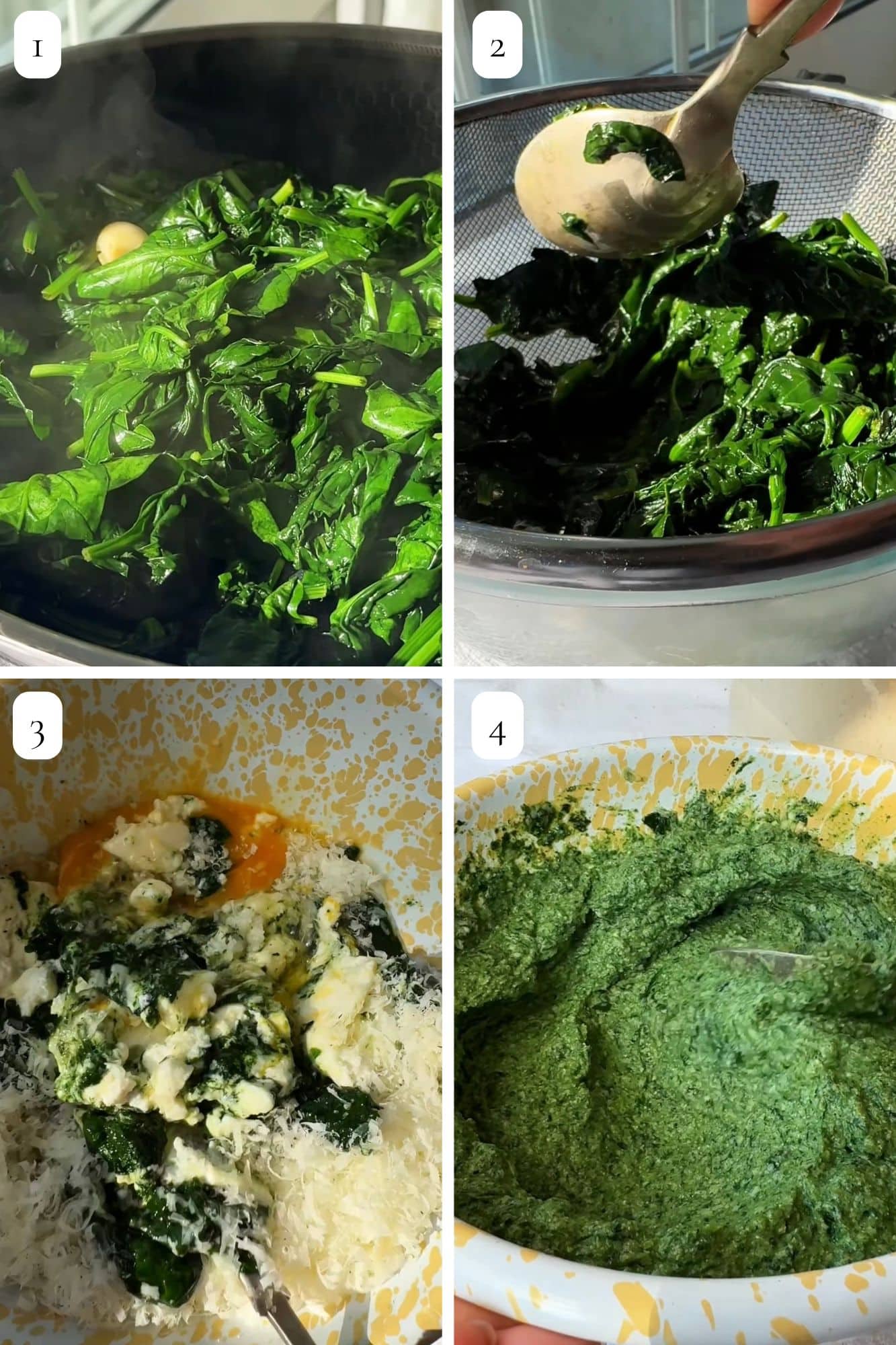
1. Preheat the oven to 200C/180C Fan. Rinse the baby spinach thoroughly in a colander and remove any large stems. Set aside.
2. Heat a drizzle of olive oil in a large non-stick frying pan set over a medium heat. Add the garlic and cook for about 30 seconds, stirring to make sure it doesn’t catch and burn, until fragrant. Add the spinach and cook for 2-3 minutes, stirring occasionally, until wilted. Once the spinach has wilted, spoon into a bowl and leave to cool completely. Once the spinach has cooled, squeeze out any excess moisture -I normally do this with my hands but you can push it through a sieve or wrap in a clean kitchen towel and squeeze out the excess water.
3. Next, either blitz the spinach in a blender or finely chop with a sharp knife. Then pop into a large bowl and add the ricotta and pecorino, followed by 2 of the eggs.
4. Mix well until combined, then add the nutmeg and season with salt and freshly ground black pepper.
Step 2: roll the pastry and fill the pie
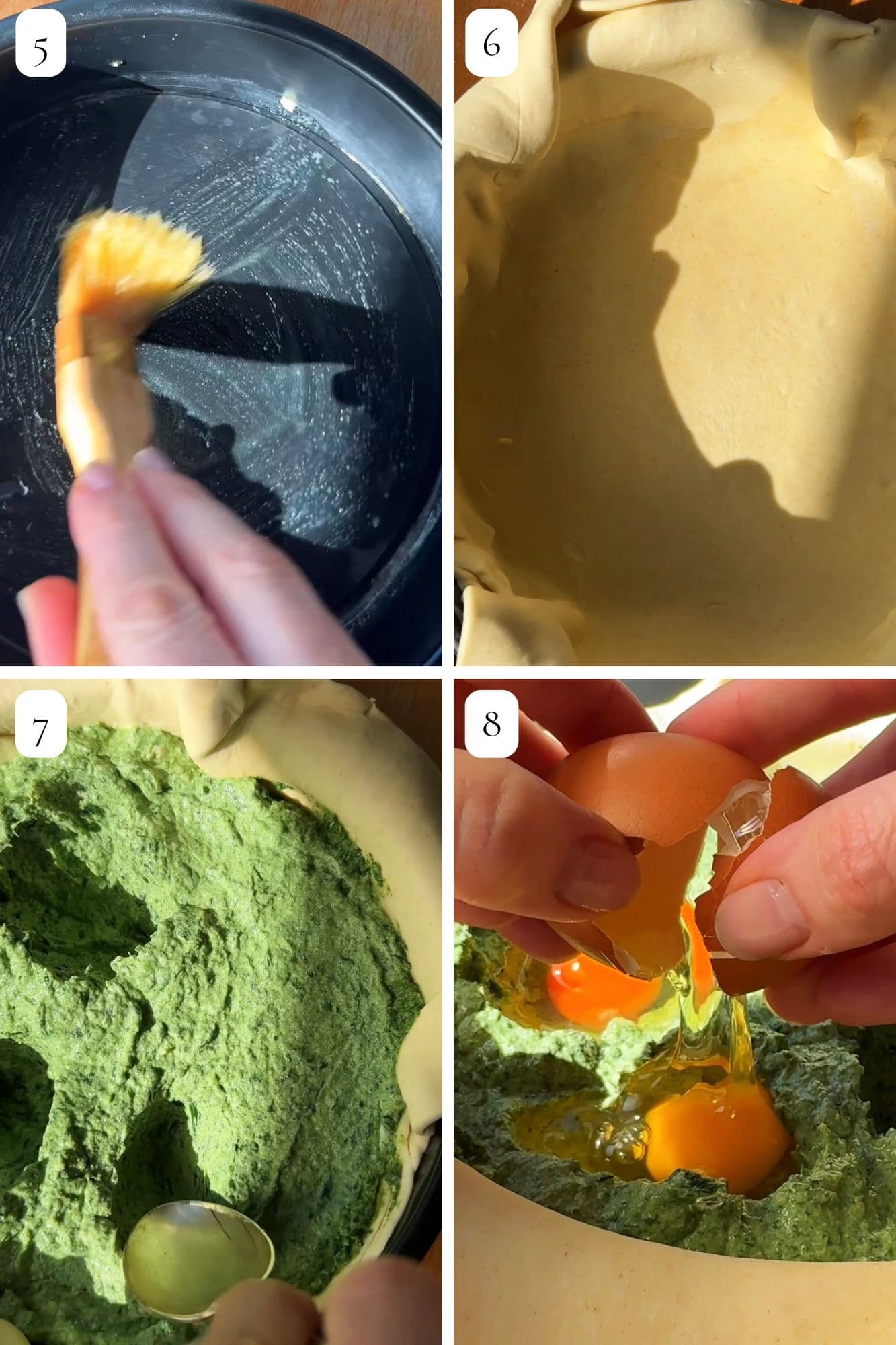
5. Grease a 20 cm (8-inch) springform tin with olive oil or melted butter and set aside.
6. Use the second sheet of pastry to line the base of the tin, letting the sides overhang. Trim off a little of the excess pastry, using the offcuts to fill in any gaps – however, bear in mind you do need a fair bit of overhang to seal over the lid of the pie.
7. Spoon in the spinach and ricotta filling and spread in a smooth and even layer. Then, using a tablespoon, make 4 little wells equally spaced apart.
8. Carefully crack an egg into each indentation, being cautious not to break the yolk. Add a tiny sprinkle of salt to each egg.
Step 3: cover & bake the pie
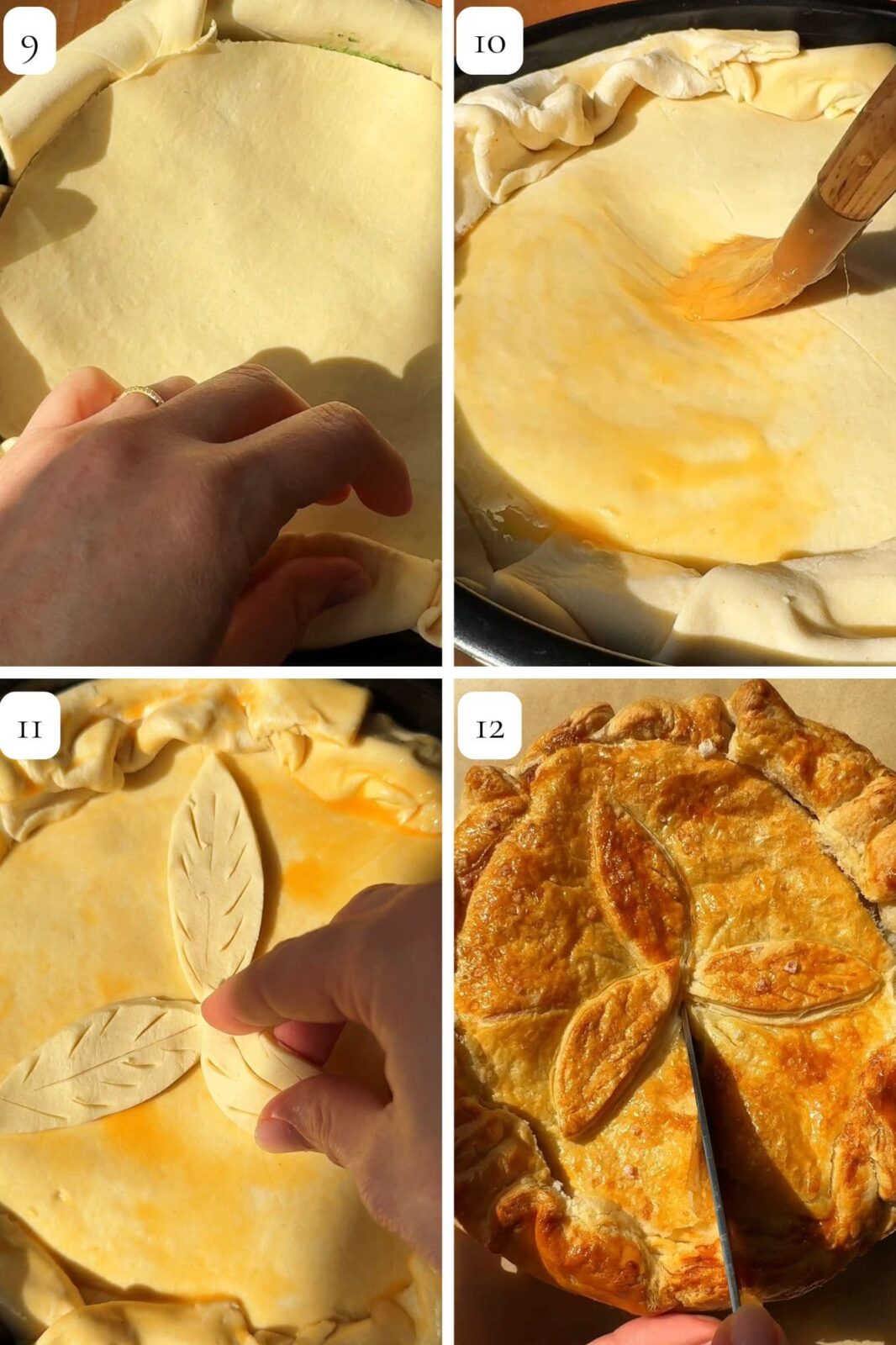
9. Gently place the pastry circle ‘lid’ on top – take care not to break the yolks. Fold the sides over onto the top and press the edges together to seal.
10. Brush the top of the pastry with a little beaten egg and sprinkle with a pinch of flaky sea salt.
11. Use a sharp knife to gently pierce holes in the lid to let the steam out (be careful, you don’t want to plunge in too deep and break a yolk). I have decorated with little pastry leaves, using the offcuts of pastry from earlier. You can do what you like or skip this.
12. Bake for about 45-50 minutes – or until the pastry is golden brown and puffed up and the filling is firm. Remove from the oven and leave to cool for at least 30 minutes before removing from the tin.
Cooking Tips:
Draining the spinach: it is really important to squeeze out as much water as you possibly can from the spinach – so don’t be tempted to rush and/or skip this step. If there is too much water left, you will end up with a soggy bottom!
Steaming: remember to make the slits in the top of the pastry to allow the steam to escape. This will prevent the filling from bursting out and help it cook evenly.
Browning too quickly: if your torta pasqualina looks like it is browning too quickly, don’t panic! Simply cover with foil and pop back in the oven until the end of the cooking time.
Standing time: I know it is tempting to dive straight into this torta pasqualina. However, it is really important to leave it to stand for at least 30 minutes before removing from the tin and slicing.
Egg wash: if you don’t want to crack another egg for the egg wash, just brush with milk.
Frequently Asked Questions
Torta pasqualina is a popular Italian Easter pie from Liguria. The outside (and top) is made from flaky, buttery, puff pastry. I use ready-made in my version but, traditionally, it would be homemade with 33 layers. Each layer being designed to represent one year of Jesus’ life. It’s usually filled with veggies and eggs too.
I am by no means fluent in Italian, but I am reliably informed it is pronounced as ‘tor-tah pah-skwah-LEE-nah’.
Traditionally, torta pasqualina is served at Easter in Italy. I love embracing traditions from all over the world and often make it over the Easter weekend in my house. Having said that, it would be great throughout spring as it is the perfect way to make the most of the gorgeous array of spring greens when they are in abundance. It makes for a lovely lunch or supper when you would normally have quiche – and is great for picnics too.
You can serve all sorts with this torta pasqualina. I often serve it with a simple salad – rocket with some Parmesan shavings, toasted pine nuts and a drizzle of extra virgin olive oil is lovely. Insalata Caprese (mozzarella, tomatoes and basil) also works really well. If I am feeling a bit more hungry, I will make some new potatoes to go on the side. Jersey Royals are scrumptious when in season.
Storage & Make Ahead Instructions
Absolutely! In fact, it is best to make this torta pasqualina in advance so it has plenty of time to cool. In Italy, it is traditionally served cold anyway. It will keep covered and chilled in the fridge for up to 3 days.
If you want to make the components separately, the spinach ricotta mix can sit in an airtight container in the fridge for 4 days. Then, when ready, you can fill the pastry case with it, crack in the eggs, cover with pastry lid and bake.
Torta pasqualina can be made ahead, left to cool completely, then covered and chilled for up to 3 days.
Other recipes you might enjoy:
If you like the sound of this torta pasqualina, you will love my Camembert en croute (whole baked Camembert in puff pastry). For more easter themed recipes, check out my mini egg cookies, mini egg cheesecake or hot cross bun bread and butter pudding.

Recipes
Puff Pastry Tomato Tart


Easy Dessert Recipes
No-Bake Chocolate Cheesecake

Easy Baking Recipes
Biscoff Blondies
Made this recipe and loved it?
I would love love LOVE if you could leave a review in the comments… I love hearing what you thought, any changes you made, the stories behind what made you try my recipes. Also, if you share a photo on Instagram, please tag me @desertislanddishes, it makes my day to see you making my creations!
Torta Pasqualina
Ingredients
- 500 g fresh baby spinach
- Olive oil
- 1 large garlic clove, crushed
- 500 g full-fat ricotta
- 60 g Pecorino, grated
- 6 large eggs
- ¼ tsp ground nutmeg
- Salt and freshly ground black pepper, to taste
- Plain flour, for dusting
- 2 x 25 cm square sheets ready made puff pastry, about 330 g
To glaze:
- 1 large egg, beaten
- Sea salt, for sprinkling
Instructions
- Preheat the oven to 200C/180C Fan. Grease a 20 cm (8-inch) springform tin with olive oil or melted butter and set aside.
- Rinse the baby spinach thoroughly in a colander and remove any large stems. Set aside.
- Heat a drizzle of olive oil in a large non-stick frying pan set over a medium heat. Add the garlic and cook for about 30 seconds, stirring to make sure it doesn’t catch and burn, until fragrant. Add the spinach and cook for 2-3 minutes, stirring occasionally, until wilted – you may need to gradually add the spinach in batches, it depends on the size of your pan. I often find it is a bit of an awkward juggling act at first, but spinach famously wilts down as the water evaporates so it won’t be an issue for long.
- Once the spinach has wilted, spoon into a bowl and leave to cool completely. If you are in a rush, you can pop it in the freezer to chill down rapidly.
- Once the spinach has cooled, squeeze out any excess moisture -I normally do this with my hands but you can push it through a sieve or wrap in a clean kitchen towel and squeeze out the excess water. Don’t be tempted to skip this step – if your spinach has too much water, you will end up with a soggy torta pasqualina which isn’t what we want!
- Next, either blitz the spinach in a blender or finely chop with a sharp knife. Then pop into a large bowl and add the ricotta and pecorino, followed by 2 of the eggs. Mix well until combined, then add the nutmeg and season with salt and freshly ground black pepper.
- Lightly dust a work surface with flour and lay the pastry out on top. Using the greased springform tin as a template, cut out a large 20 cm (8-inch) circle – this will be the torta pasqualina lid.
- Use the second sheet of pastry to line the base of the tin, letting the sides overhang. Trim off a little of the excess pastry, using the offcuts to fill in any gaps – however, bear in mind you do need a fair bit of overhang to seal over the lid of the pie (have a look at the step-by-step images which explain in more detail).
- Spoon in the spinach and ricotta filling and spread in a smooth and even layer. Then, using a tablespoon, make 4 little wells equally spaced apart.
- Carefully crack an egg into each indentation, being cautious not to break the yolk. Add a tiny sprinkle of salt to each egg.
- Gently place the pastry circle ‘lid’ on top – take care not to break the yolks. Fold the sides over onto the top and press the edges together to seal. Brush the top of the pastry with a little beaten egg and sprinkle with a pinch of flaky sea salt.
- Use a sharp knife to gently pierce holes in the lid to let the steam out (be careful, you don’t want to plunge in too deep and break a yolk).
- Bake for about 45-50 minutes – or until the pastry is golden brown and puffed up and the filling is firm (obviously you wont know this until you cut into it, but the eggs should be set firm, like a hard boiled egg, so whilst at 35 minutes the pastry looks good, the eggs will be a bit soft).
- Remove from the oven and leave to cool for at least 30 minutes before removing from the tin.
- Slide onto a plate, cut into slices and serve warm or at room temperature.